



Published: October 19, 2026
Last Updated: October 19, 2026
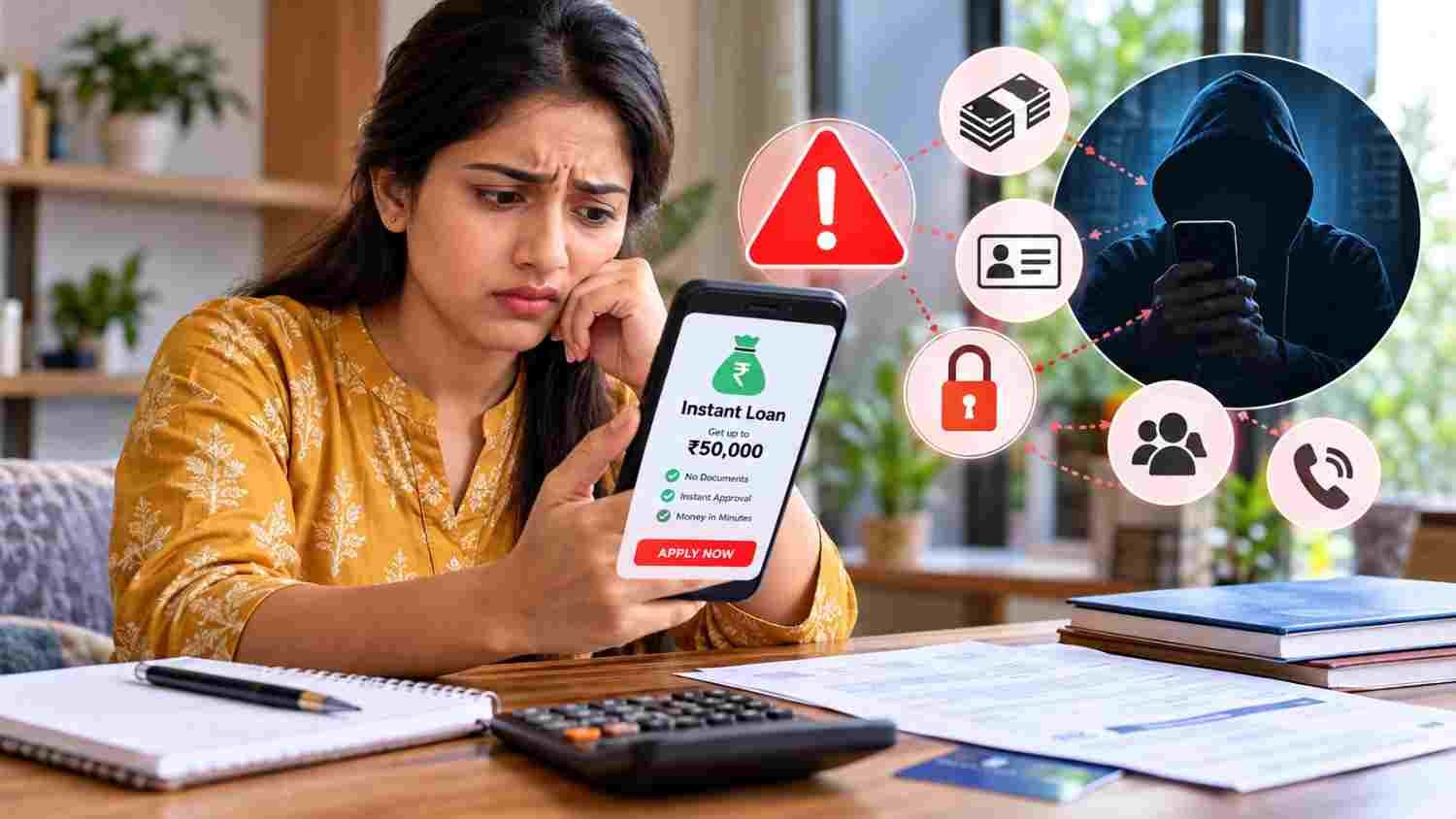
Getting a loan through your phone can be convenient, but it is important to know how to identify fake loan apps before sharing your personal details or accepting an offer. Some fraudulent applications promise instant money, hide the real cost of borrowing, or misuse sensitive information. Others pretend to represent genuine banks and financial companies.
The good news is that you can take simple steps to protect yourself. Check who is actually providing the loan, understand the repayment terms, review the app’s permissions, and never share confidential banking credentials. This guide explains the main warning signs, how to verify a lender, and what to do if you become a victim of digital lending fraud in India.
Quick Answer: How to Identify Fake Loan Apps
To identify fake loan apps, verify the bank or Non-Banking Financial Company behind the loan, check the lender’s official website, review the app’s privacy policy, and read the loan agreement before proceeding. Be cautious if an agent demands an unexplained advance payment, promises guaranteed approval without proper checks, requests your OTP or UPI PIN, or pressures you to act immediately.
The Reserve Bank of India provides a public Digital Lending Apps directory to help people check whether an app claims an association with an RBI-regulated lender. You should also contact the lender using independently verified details rather than relying only on information the app provides. If you experience cyber financial fraud, contact your bank immediately, call 1930, and report the incident through the National Cyber Crime Reporting Portal at https://cybercrime.gov.in/.
Key Takeaways
Before you apply for an online loan, remember these important points.
Verify the actual bank or NBFC responsible for providing the loan.
Check the lender’s official website and the RBI Digital Lending Apps directory where applicable.
Read the Key Fact Statement, interest rate, fees, repayment schedule, and loan agreement.
Never disclose your OTP, UPI PIN, banking password, or other confidential authentication credentials.
Avoid suspicious download links and applications that request unnecessary access to your phone.
Do not transfer unexplained advance payments to an unverified person.
Preserve evidence and report suspected cyber financial fraud promptly.
Remember that a professional-looking website or app does not automatically prove that a lender is genuine.
Who Should Use This Digital Lending Safety Guide?
Target audience: Indian consumers, first-time borrowers, rural households, salaried individuals, and people considering microfinance or personal loans.
Industry: Banking, microfinance, and digital lending.
When to use this guide: Before downloading a loan app, submitting identity documents, granting phone permissions, paying a fee, or accepting a loan offer.
Use cases: Verifying a lender, comparing loan offers, understanding repayment obligations, protecting personal information, and identifying possible digital lending fraud.
Decision supported: Whether to proceed with a loan application, pause for further verification, or report a suspicious offer.
What Are Fake Loan Apps and How Do Digital Lending Scams Work?
A fake loan app is an application or online platform that misrepresents its lending services, impersonates a legitimate financial institution, or attempts to obtain money or personal information through deceptive practices.
For example, an application might advertise an instant loan of ₹20,000. After you submit your identity documents, someone may ask you to pay a fee before the money is released. Once you transfer the money, the person may demand another payment or stop responding.
Other fraudulent applications may collect personal information and use it for unauthorised purposes. Some may send threatening messages or misuse contact details to pressure borrowers.
However, not every unfamiliar loan app is fraudulent. Legitimate banks and NBFCs also provide digital lending services. The important difference is whether the lender is properly identified, the loan terms are transparent, and the service follows the applicable rules.
Digital lending fraud can affect people looking for personal loans, emergency funds, education financing, or credit for household needs. Therefore, you should verify an offer before submitting documents, paying charges, or accepting the agreement.
Why Is It Important to Know How to Identify Fake Loan Apps?
A loan application may request information such as your name, address, phone number, identity documents, bank details, and income information. If that information reaches an untrustworthy operator, it may create financial and privacy risks.
First, you could lose money through fraudulent fees or unauthorised transactions. Second, someone could misuse your personal information to impersonate you or contact other people. Third, an unclear loan agreement may leave you uncertain about the actual repayment amount.
Moreover, suspicious applications can create stress through repeated calls, threatening messages, or misleading claims about outstanding dues.
Understanding how to identify fake loan apps helps you pause before taking action. It also helps you distinguish between a genuine lending process and a suspicious offer.
The aim is not to make you afraid of all digital financial services. Instead, it is to help you use them carefully and make decisions based on verified information.
How to Identify Fake Loan Apps: 10 Warning Signs
The following fake loan app warning signs can help you identify offers that need closer examination. One warning sign does not always prove fraud, but several warning signs together should make you stop and verify the offer.
1. The Actual Lender Is Not Clearly Identified
A loan offer should identify the bank or NBFC responsible for providing the credit. If the app only displays a brand name without explaining which regulated entity provides the loan, investigate before continuing.
Check the company’s legal name, official website, customer support details, and grievance redressal information.
Do not trust a logo alone. Fraudsters can copy the name, colours, and visual design of a genuine financial company.
2. The App Promises Guaranteed Approval
Be cautious of statements such as “loan approved for everyone” or “money guaranteed without any checks.”
Lenders generally assess applications according to their eligibility criteria and lending policies. The exact process varies, and some loans can be processed quickly. However, a promise of guaranteed approval should not replace verification.
Before sharing information, check who is making the offer and whether the lender explains its application process clearly.
3. You Must Pay an Unexplained Advance Fee
An agent may ask for a security deposit, release charge, insurance payment, or another fee before disbursing the loan.
For example, someone might tell you that you must transfer ₹1,500 to a personal UPI ID before receiving a promised loan. This is a serious warning sign, especially when the charge is not documented in the official loan terms.
Do not make a payment simply because someone threatens to cancel the offer. Contact the actual lender using its independently verified contact details and ask whether the charge is genuine.
Legitimate loans may include disclosed charges. The concern is an unexplained demand, an unverified recipient, or pressure to pay outside the lender’s stated process.
4. The App Requests Unnecessary Phone Permissions
Some suspicious apps request access to contacts, call logs, photographs, files, or other sensitive information that appears unrelated to their stated purpose.
Before installing an application, review its requested permissions. Ask whether the access is necessary and whether the privacy policy explains how the information will be used.
If an app requests excessive access and does not provide a convincing explanation, do not proceed until you have verified the service.
5. The Privacy Policy Is Missing or Unclear
A legitimate digital service should explain how it handles personal information. If the privacy policy is missing, difficult to understand, or inconsistent with the app’s behaviour, be cautious.
Look for information about data collection, storage, sharing, consent, and complaint procedures.
Also, remember that a privacy policy alone does not prove that an application is safe. You should check the lender’s identity and other details as well.
6. The Loan Costs Are Hidden
Some advertisements focus on a small monthly instalment while leaving out the full repayment amount, loan duration, or additional charges.
Before accepting an offer, request and read the Key Fact Statement, commonly called the KFS. Check the Annual Percentage Rate, applicable fees, repayment schedule, and other disclosed conditions.
If an agent refuses to explain the cost or asks you to accept an agreement without reading it, pause the application.
7. Someone Asks for Your OTP or UPI PIN
Your OTP, UPI PIN, banking password, and confidential authentication credentials should not be shared with a person claiming to approve or release your loan.
Be particularly careful if someone asks you to approve an unexpected payment request, reveal a verification code, or install remote access software on your phone.
If a request seems unusual, stop the interaction and contact your bank through its official channel.
8. The Offer Creates Urgent Pressure
A caller may claim that an offer will expire within minutes or that you must pay immediately to prevent cancellation.
Urgency does not automatically prove that a loan is fraudulent. However, pressure can make it harder to check the facts.
Take time to review the documents, verify the lender, and compare the stated terms. A genuine financial decision should not depend on blindly following an unknown caller’s instructions.
9. The App Comes From an Unverified Download Link
Avoid installing loan applications from unknown SMS messages, forwarded messages, suspicious advertisements, or unfamiliar websites.
Even when an application appears in an app store, you should not assume that every claim made by the developer is genuine.
Check the developer’s identity, the lender relationship, the privacy policy, and the official website. If the lender does not acknowledge the application, do not submit sensitive information until the relationship is verified.
10. Recovery Agents Use Threats or Harassment
Some suspicious operators use abusive calls, threatening messages, or attempts to shame borrowers by contacting their friends and relatives.
If someone claims to be a recovery agent, verify their identity with the lender. Preserve messages and call details, and report threatening or unlawful conduct to the appropriate authorities.
If you have borrowed money from a genuine lender, do not ignore your contractual obligations. Instead, use the lender’s official complaint process if you believe that you are being treated improperly.
How to Identify Fake Loan Apps Before Applying
Knowing how to identify fake loan apps requires more than checking online reviews. You should confirm the lender’s identity and understand how the application is connected to the institution providing the credit.
Check the RBI Digital Lending Apps Directory
The Reserve Bank of India has operationalised a public directory of Digital Lending Apps to help customers verify claims about an app’s association with an RBI-regulated entity.
You can begin at the official RBI website and look for the Digital Lending Apps directory.
However, there is an important limitation. According to the government’s explanation of the directory, the information is submitted by regulated entities and is not independently validated by the RBI. Therefore, inclusion in the directory should be treated as a useful verification step, not a guarantee of safety.
Likewise, an app’s absence from the directory does not by itself prove that it is fraudulent. Contact the claimed lender directly to clarify the relationship.
Visit the Lender’s Official Website
Find the lender’s official website independently. Do not rely only on a link sent by a caller or an advertisement.
Check whether the website identifies the digital application or service provider. If the company claims that another entity is providing the loan, confirm that relationship directly.
Also check whether the website provides customer support, grievance redressal details, and information about the loan products it offers.
Verify the Company Details
Look for the legal name of the bank or NBFC and compare it with the details in the loan documents.
If the app uses one company name but the agreement identifies a different lender, ask for a clear explanation before proceeding.
You should understand which entity is providing the credit, who handles customer complaints, and where repayments must be made.
Read the Loan Agreement and KFS
A genuine loan offer should provide the required loan documents and clear information about its terms.
Before accepting, check the amount being borrowed, the repayment period, the instalment schedule, the APR, the applicable fees, and the consequences of late payment.
Do not accept an agreement that you cannot understand. Ask the lender to explain any unclear clause before you agree to the loan.
Check the Complaint Process
A lender should provide information about how customers can raise complaints.
Find the grievance redressal details and keep a copy of the information. If the lender does not explain how to contact it or refuses to address basic questions, investigate further.
Review the App’s Privacy Practices
Read the privacy policy and review the permissions requested by the application.
Check whether the app explains how personal information is used and whether it requests access that seems unrelated to the service. Avoid uploading identity documents through unverified channels.
These steps do not guarantee that every risk will be eliminated. However, they can help you identify inconsistencies before sharing sensitive information.
Fake Loan Apps vs Safe Loan Apps: What Is the Difference?
The following comparison can help you decide what to investigate before applying.
No single item proves that a service is safe or fraudulent. Use several checks together and confirm the lender’s identity independently.
How to Identify Fake Loan Apps Using RBI Digital Lending Guidelines
The Reserve Bank of India has issued digital lending directions to strengthen transparency and protect borrowers using digital credit services.
The RBI’s Digital Lending Directions, 2025 consolidate earlier instructions and include provisions addressing digital lending arrangements, borrower information, disclosure, and the role of lending service providers.
Here are several practical points borrowers should understand.
Clear Information About Loan Costs
Borrowers should receive the required information about the loan, including the applicable cost disclosures. The Key Fact Statement is particularly important because it helps you understand the APR and other relevant charges.
Read the document before accepting the loan. Do not rely only on a salesperson’s verbal explanation.
Transparency About the Lending Entity
You should be able to identify the entity responsible for providing the loan. If a digital application is operated by a service provider on behalf of a lender, verify that relationship through official channels.
Protection of Personal Information
Digital lending arrangements must follow applicable requirements concerning borrower information and consent. Nevertheless, you should still review the application’s privacy practices and avoid sharing confidential credentials.
Responsible Loan Disbursal and Repayment
The RBI’s digital lending framework contains requirements governing loan disbursal and repayment arrangements, subject to specified exceptions. Therefore, an unexpected demand to transfer money to an unrelated account deserves careful verification.
Access to Complaint Mechanisms
Borrowers should know how to raise complaints about the lending service. Before accepting an offer, find the lender’s grievance redressal information and keep the relevant documents.
For the authoritative requirements, read the RBI Digital Lending Directions and related guidance. Regulatory requirements may change, so always consult the latest official material.
How to Identify Fake Loan Apps That Risk Your Privacy
Loan app privacy risks deserve attention because your personal information can be valuable to fraudsters.
When you apply for credit, you may need to provide information to establish your identity and assess your eligibility. However, this does not mean that every application needs unrestricted access to your phone.
Misuse of Contact Information
If an application collects contacts without a clear and appropriate reason, that information may expose people in your address book to unwanted calls or messages.
Review the permissions before installing the app. If you have already granted access to a suspicious application, revoke unnecessary permissions and consider removing the application.
Misuse of Identity Documents
Identity documents may contain information that could be misused if it reaches an untrustworthy operator.
Share documents only through verified channels. Do not send them to random phone numbers or upload them to unfamiliar websites simply because someone claims to be a loan agent.
Unauthorised Account Activity
Fraudsters may attempt to obtain credentials or persuade people to approve transactions.
Never disclose your UPI PIN, OTP, or banking password. If you suspect that your credentials have been compromised, contact your bank immediately and follow its security instructions.
Misuse of Photographs and Personal Details
A fraudulent operator may misuse photographs or personal information to pressure a borrower.
If this happens, preserve the messages, screenshots, account details, and other relevant evidence. Report the incident through the appropriate official channels.
What Should You Do If You Have Already Installed a Suspicious Loan App?
Installing an app does not automatically mean that your money or identity has been compromised. However, if you suspect that the app is fraudulent, take precautions.
First, stop sharing additional information. Do not submit further documents or follow instructions from an unverified agent.
Second, review the permissions granted to the application. Revoke access that is unnecessary or suspicious. If you believe the app is malicious, remove it after preserving any evidence you may need for a complaint.
Third, review your bank and UPI transactions. If you notice an unfamiliar transaction or believe your credentials have been exposed, contact your bank immediately.
Next, change any compromised passwords and follow your bank’s instructions for securing your account. Do not share verification codes with anyone who contacts you unexpectedly.
Finally, save relevant screenshots, messages, payment receipts, transaction references, and contact details. These records may help when reporting the incident.
How to Identify Fake Loan Apps and Report Digital Lending Fraud
If you have lost money or suspect that a digital loan offer is fraudulent, report it promptly. Quick action may help the relevant institutions respond, although it cannot guarantee recovery of the money.
Step 1. Contact Your Bank or Payment Provider
If a suspicious transaction has occurred, contact your bank or payment service provider immediately through its official customer support channel.
Explain what happened and provide the transaction reference, date, amount, and other requested details. Follow the institution’s instructions for securing your account and raising a dispute.
Step 2. Call the Cyber Financial Fraud Helpline
For cyber financial fraud in India, call 1930 as soon as possible.
Keep the transaction details and other evidence ready. Follow the instructions provided by the helpline and complete the requested reporting process.
Step 3. Submit a Complaint Online
Use the National Cyber Crime Reporting Portal to report the incident.
Provide accurate information about the application, phone numbers, payment details, messages, and the events that occurred. Save your complaint reference for future communication.
Step 4. Preserve Evidence
Keep screenshots of the loan offer, messages, payment requests, app details, and transaction receipts.
Do not delete important records simply because you have removed the application from your phone. These details may help the authorities understand what happened.
Step 5. Report Threats and Misuse of Personal Information
If someone threatens you, misuses your information, or attempts to harass you, preserve the evidence and report the conduct through the appropriate authorities.
If you believe a legitimate lender or its service provider is involved, use the lender’s official grievance redressal process as well.
The National Cyber Crime Reporting Portal and the 1930 helpline are official channels for reporting cyber financial fraud. You can find further information on the Government of India cybercrime portal.
What Do the Official Figures Tell Us About Digital Lending Safety?
The issue of fraudulent loan applications has received attention from Indian authorities.
In a government press release dated July 21, 2026, the Ministry of Finance stated that the Ministry of Electronics and Information Technology had blocked a total of 87 illegal loan lending applications under Section 69A of the Information Technology Act, 2000, following due process. The same release described the RBI Digital Lending Apps directory as a way for customers to check an app’s claimed association with a regulated entity.
This figure refers to applications reported as blocked in that government statement. It should not be interpreted as the total number of fraudulent loan apps operating in India, nor does it indicate the current number of active scams.
The information does, however, show why borrowers should verify an application instead of relying only on its advertising or appearance.
How to Choose a Loan Safely
Once you have ruled out obvious warning signs, take time to assess whether the loan is suitable for your needs.
Borrow Only What You Need
Before applying, work out how much money you actually require. A larger loan can increase the amount you must repay and may place additional pressure on your monthly budget.
Understand the Repayment Schedule
Check the due dates, instalment amounts, repayment period, and total cost. Consider whether the payments fit your income and existing financial commitments.
Ask Questions Before Signing
If a charge, clause, or repayment condition is unclear, ask the lender to explain it in writing.
Do not sign an agreement simply because someone says that the terms are standard. You should understand your obligations before accepting the loan.
Keep a Copy of Your Documents
Save your KFS, sanction letter, loan agreement, repayment schedule, and receipts.
These records can help you confirm the terms later and support a complaint if a dispute arises.
Verify Every Unexpected Request
If someone contacts you after the application and requests a new payment, a different repayment account, or additional sensitive information, verify the request independently.
Use the lender’s official contact details rather than replying directly to a suspicious message.
Common Mistakes to Avoid When Applying for an Online Loan
Even careful borrowers can overlook important details when they need money urgently. Avoid these common mistakes.
Trusting advertisements without checking the lender. An advertisement is not proof that the service is genuine. Verify the company and its lending relationship.
Focusing only on the advertised interest rate. Review the APR, fees, repayment schedule, and total cost before accepting.
Ignoring app permissions. Check what information the app wants to access and whether that access is explained.
Paying because of pressure. Do not make an unexplained transfer simply because an agent claims the loan will be cancelled.
Sharing an OTP with customer support. Never reveal confidential authentication credentials to someone who calls or messages you.
Deleting evidence after a suspicious interaction. Preserve messages, receipts, screenshots, and transaction references in case you need to report the incident.
Assuming a familiar logo proves authenticity. Fraudsters may imitate genuine brands. Verify the relationship through the official lender.
Ignoring the complaint process. Know where to report a problem before you accept a loan.
How Financial Awareness Helps You Make Better Borrowing Decisions
Financial awareness means understanding the information you need before making a financial decision. It helps you compare offers, recognise warning signs, and ask better questions.
For example, before accepting a loan, you should know who is lending the money, how much you will repay, when the instalments are due, and what happens if you miss a payment.
You should also understand the difference between a legitimate fee disclosed in the loan documents and a suspicious payment demand made by an unverified person.
If you are unsure about a financial product, take time to verify it. Ask for written information and speak directly with the actual lender.
Moreover, share useful information with family members who may be unfamiliar with digital lending. A simple discussion about OTP safety, suspicious links, and repayment terms can help everyone make more informed choices.
How Sukham Microfinance Supports Informed Financial Decisions
Borrowers should have access to clear information about the financial products they consider. Before proceeding with any loan, ask about eligibility, applicable charges, repayment schedules, required documents, and the terms of the agreement.
You can explore the services available through Sukham Microfinance and learn more about the organisation through its About Us page.
If you have questions about Sukham’s services, use the official Contact Us page to reach the organisation through its published contact channels.
Always verify the identity of anyone claiming to represent a financial institution. Do not make payments or share confidential information solely because someone uses a company name or logo.
The safest approach is to understand the offer, verify the lender, and read the terms before making a commitment.
Conclusion
Knowing how to identify fake loan apps can help you make safer financial decisions. Verify the lender, review the loan terms, understand the total borrowing cost, and check the app’s privacy practices before proceeding.
Never share confidential banking credentials or make unexplained payments to an unverified person. If you suspect fraud, contact your bank promptly and report the incident through official channels.
Digital lending can be useful when you understand the terms and use a verified service. By taking time to check the details, you can reduce avoidable risks and make borrowing decisions with greater confidence.
Remember: Verify first, understand the terms, and share your information only when you know who is receiving it.
Latest Blogs
You may also find these articles helpful: